Free shipping on all orders in India | Worldwide shipping available (charges apply) Dismiss



₹1,998.00 ₹999.00
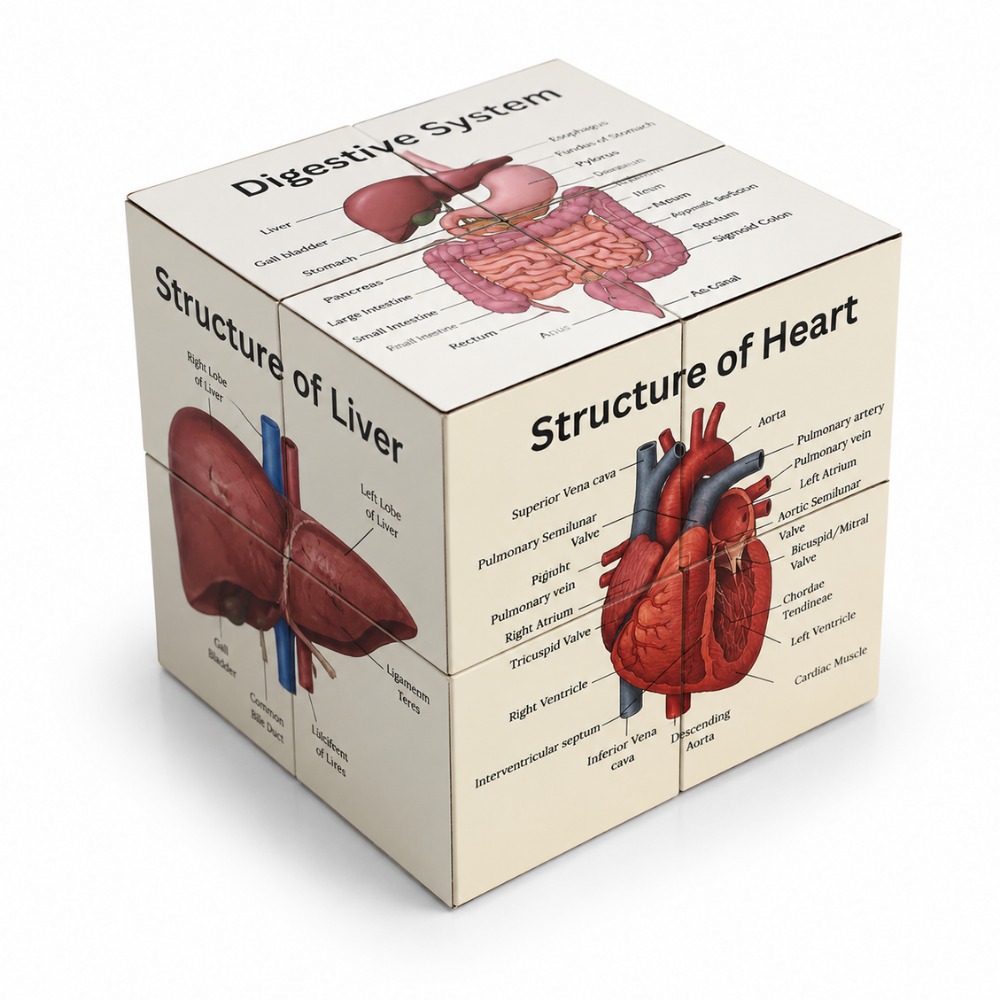
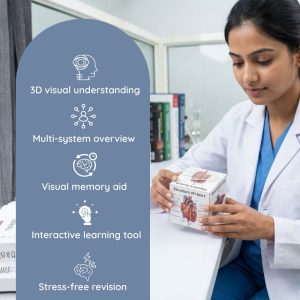
INTERACTIVE LEARNING TOOL: Our B-Arm Human Anatomy Cube simplifies human biology with hands-on exploration, making learning engaging, fun, and a complete educational experience.
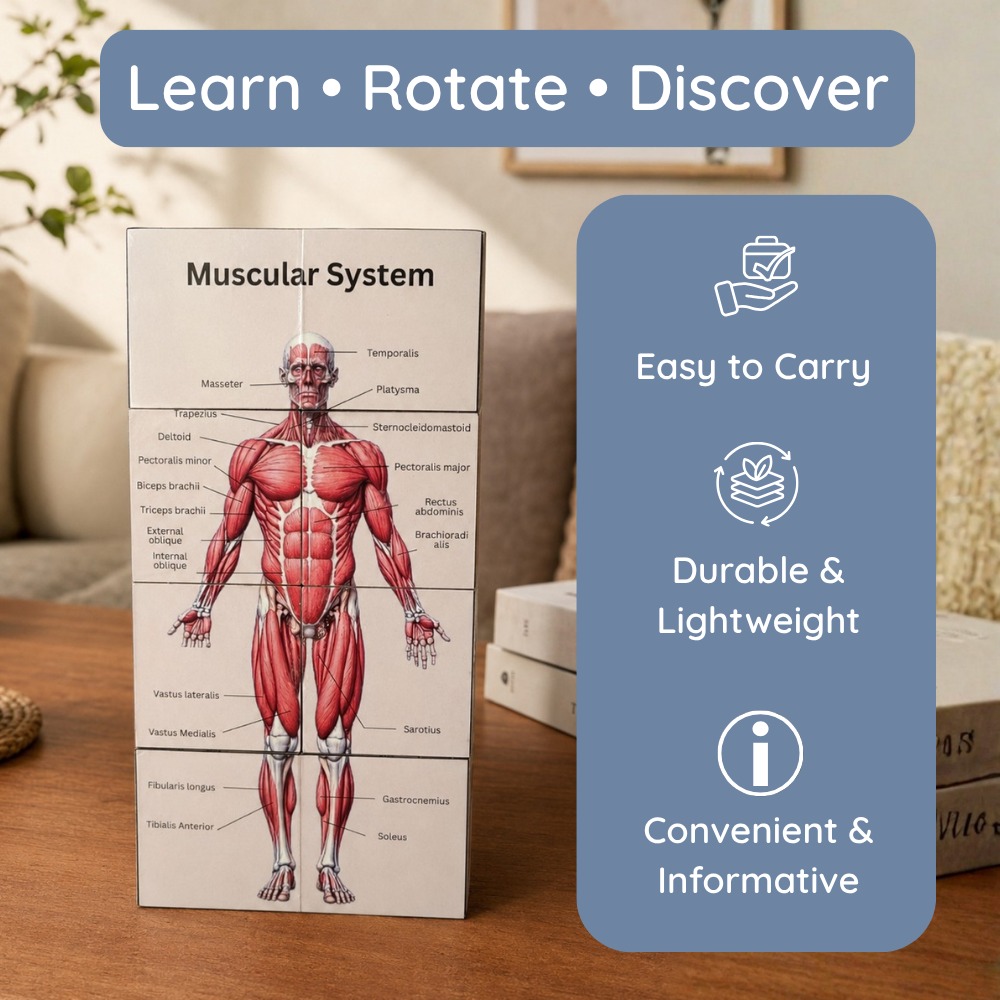
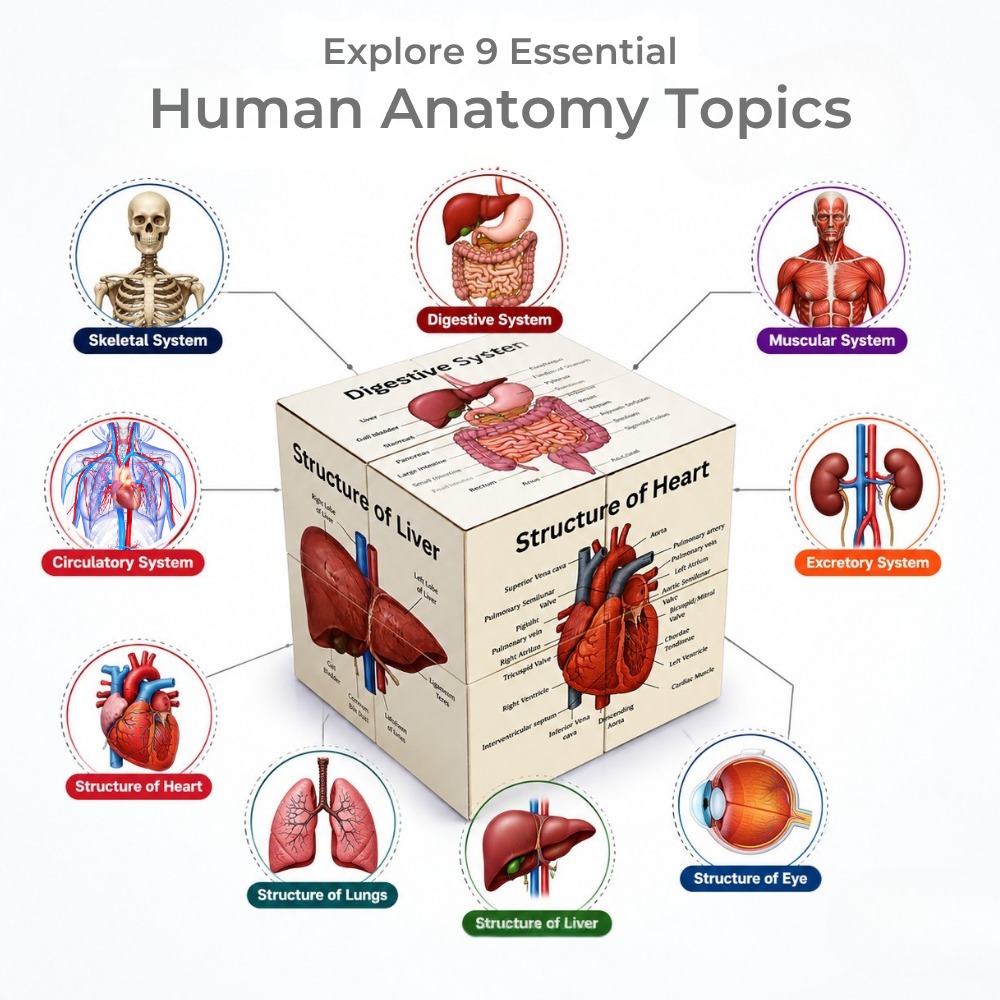
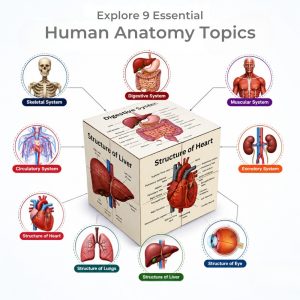
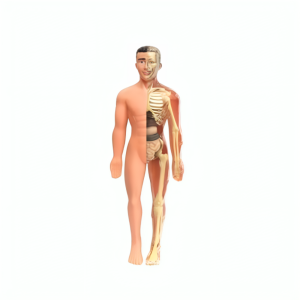
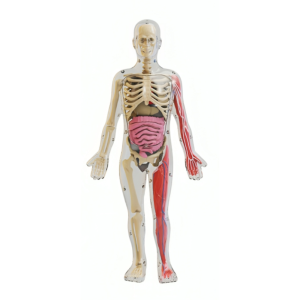
MULTI-SYSTEM VISUALIZATION: Helps users clearly visualize 9 human body systems, including heart, respiratory, visual, skeletal, muscular, circulatory, digestive, liver & excretory systems, offering a complete multi-system overview.
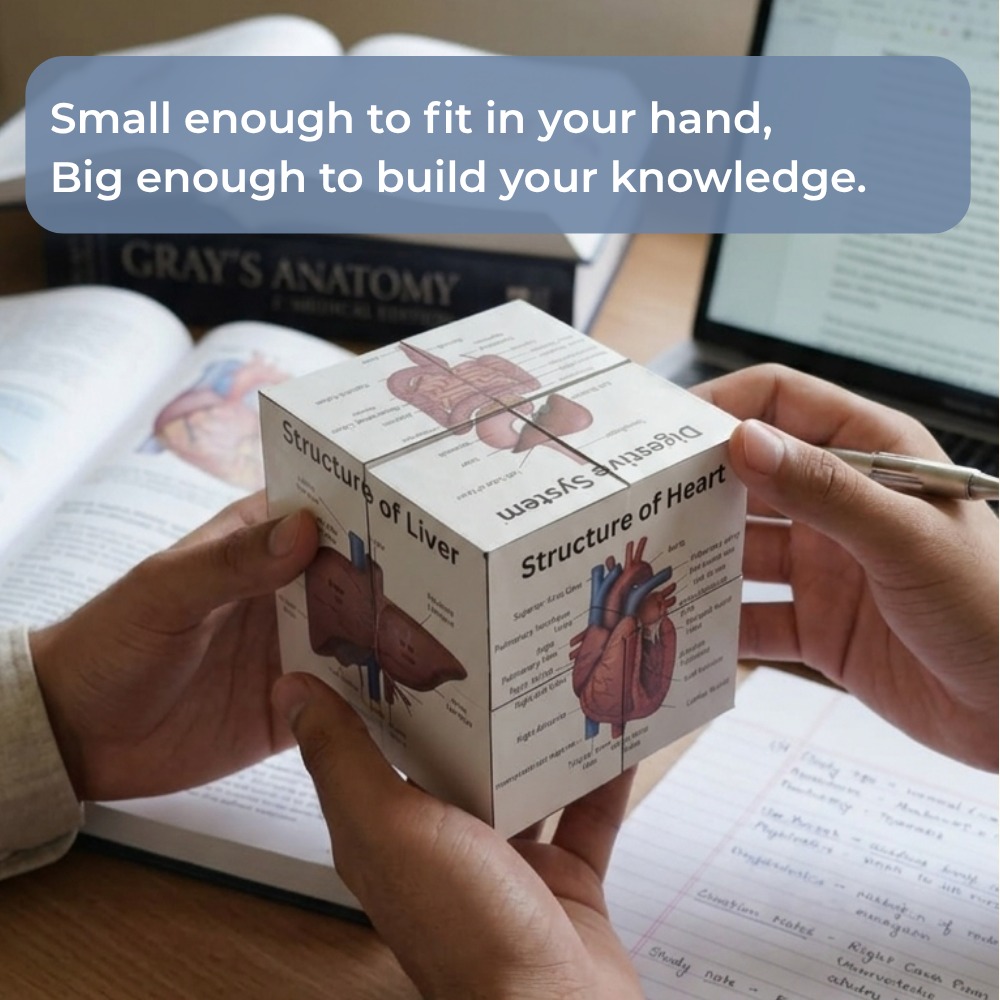
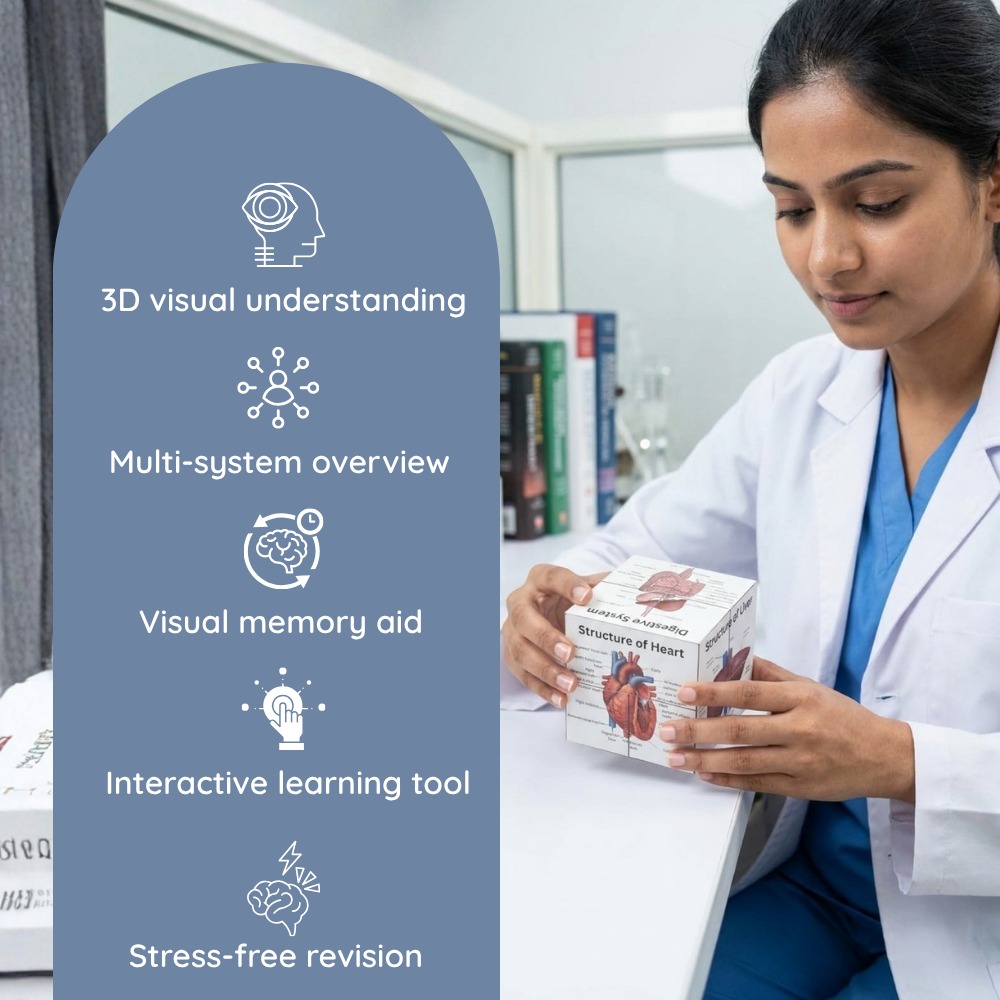
VISUAL AID FOR QUICK REVISION: Acts as a powerful visual revision tool that supports faster recall, stress-free studying, and improved retention—ideal for exam preparation and concept reinforcement.
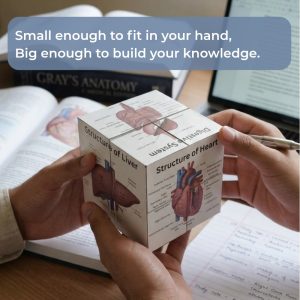
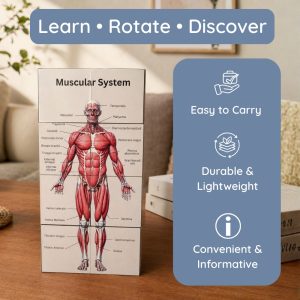
DURABLE, LIGHTWEIGHT & PORTABLE DESIGN: Easy to handle, space-saving, compact, and ideal for classrooms, labs, home study, science fairs, or on-the-go learning.
VERSATILE EDUCATIONAL USE: Perfect for students (medical, nursing, physiotherapy, biology), teachers, parents teaching at home, healthcare professionals, and STEM enthusiasts; can be used as a teaching aid, demonstration model, study tool, STEM activity, educational gift, or display item for science collections.
HIGH-QUALITY MATERIAL: Inner core made of high-quality plastic with an outer adhesive sticker layer for long-lasting durability and repeated use.
Out of stock
If you don’t see the price, please Login / Register as Medical Professional/ Hospital Customer
Login / RegisterOur B-Arm Human Anatomy Cube is an interactive learning tool designed to make human biology simple, engaging, and easy to understand through hands-on learning. Providing you with the most creative and fun way to study anatomy, this human body fold out cube lets learners explore facts and figures about the human body while enjoying the process. This compact anatomy cube clearly visualizes 9 human body systems, including the heart, respiratory, visual, skeletal, muscular, circulatory, digestive, liver & excretory systems, offering a complete multi-system overview in one model. This product should not be substituted for formal education and should be used as an additional aid to supplement academic learning. It works as an effective visual memory aid by providing a clear understanding that supports quick learning, easy recall, and stress-free revision. The cube is lightweight, durable, easy to handle, and features a space-saving design, making it ideal for classrooms, school and college laboratories, science fairs, clinics, and home study. Suitable for medical students, nursing students, physiotherapy students, biology learners, teachers, educators, homeschooling parents, doctors, and healthcare professionals, it serves as a teaching aid, educational toy, demonstration model, study tool, STEM activity resource, and educational gift or display item for science enthusiasts. The inner structure is made from high-quality plastic, while the outer surface is finished with a durable adhesive sticker to ensure long-lasting use and clear visuals.
HOW TO USE:
UNFOLD THE CUBE: Gently open or rotate the human anatomy cube to reveal its different sides and inner layers. Each fold displays a new section of the human body.
EXPLORE HUMAN BODY SYSTEMS: Flip or fold the cube layer by layer to view systems such as the heart, respiratory, visual, skeletal, muscular, circulatory, digestive, liver & excretory systems for clear, hands-on learning.
OBSERVE THE LABELED PARTS: Carefully study the labelled organs and body parts to understand their names, positions, and functions.
HANDLE WITH CARE: Rotate and fold the cube smoothly to avoid damage to the joints or printed layers.
CLEAN AND MAINTAIN: Wipe the cube regularly with a soft cloth and store it away from dust and direct sunlight to preserve print quality and durability for long-term use.
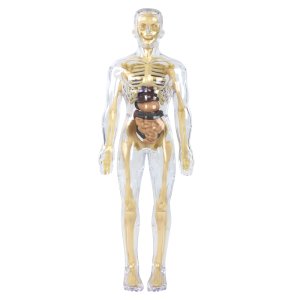
A human anatomy chart provides a flat, visual reference for quick study, while our anatomy cube offers a hands-on learning experience. A 3D skeleton model focuses mainly on the skeletal system, whereas our anatomy study cube explains multiple body systems through interactive learning. An organ model set displays individual organs separately, while our human anatomy cube presents multiple body systems in one compact tool. A human brain model explains brain structure in detail, whereas our anatomy cube gives a broader overview of human anatomy. A human body model shows the overall structure in a fixed form, while our human anatomy study cube allows foldable, engaging exploration.
| Weight | 0.3 kg |
|---|---|
| Dimensions | 13.5 × 8 × 22 cm |
1. What is the B-Arm Human Anatomy Cube?
Answer: The Human Anatomy Cube is an interactive educational tool that helps users explore human body systems. It is designed for hands-on learning and visual understanding of complex anatomy.
2. Which body systems are included in the cube?
Answer: The anatomy cube features multiple systems including heart, respiratory, visual, skeletal, muscular, circulatory, digestive, liver & excretory systems. Each system is clearly labeled for easy study and reference.
3. Who can use the anatomy cube?
Answer: It is suitable for students, medical and nursing learners, teachers, parents, healthcare professionals, and science enthusiasts. The learning cube is also useful in classrooms, labs, and home study.
4. How should I unfold the cube?
Answer: Gently open or rotate the cube to reveal each side and inner layer. Each fold displays a new part of the human anatomy for exploration.
5. What materials are used in the cube?
Answer: The inner part of the cube is made of durable plastic, while the outer layer is coated with an adhesive sticker. This ensures longevity and resistance to regular use.
₹1,799.00 ₹785.00
Out of stock
Out of stock
Out of stock
Out of stock
100% Secure and Trusted Payment